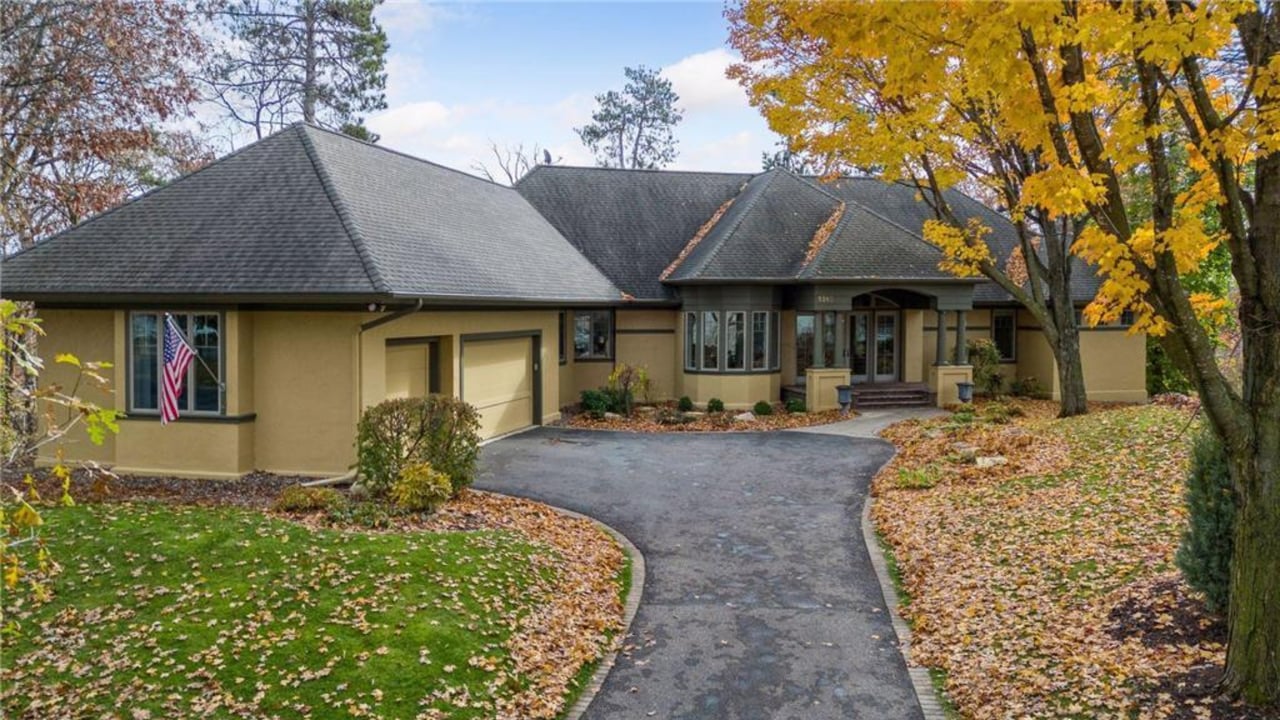
Can You Sell a House That's Held in a Revocable Living Trust in Minnesota?
Yes. A revocable living trust does not block the sale, and you almost never have to pull the house back into your personal name first. Because you kept control of the trust, you or your successor trustee sign the listing and closing papers as trustee, the title company reviews a Certificate of Trust under Minnesota Statute 501C.1013 instead of the full trust document, and the property transfers by a trustee's deed. If you sell while you're living, you still claim the federal home-sale exclusion. If a successor trustee sells after your death, the home gets a stepped-up cost basis that usually erases the capital gain.
By Darin Bjerknes | July 9, 2026
A Woodbury couple I worked with set up a revocable living trust back in 2015, deeded their house into it, and then mostly forgot the trust existed. When they decided to downsize to a Stillwater townhome, their first question was, "Do we have to take the house out of the trust before we list it?" The answer was no, and the sale closed right on schedule. But the closing paperwork looked different from a normal one, and nobody had walked them through why.
There's a second version of this I see just as often. A parent in Lake Elmo passes away, an adult child is named successor trustee, and that child now has to sell the family home from inside a trust they've never administered. They're grieving, they're getting conflicting advice from siblings, and a title company just asked them for a "certificate of trust" they've never heard of.
Both situations are routine once you know the moving parts. Here's how selling a home held in a revocable living trust actually works in Minnesota, whether you're selling your own home as your own trustee or stepping in as a successor trustee after a death.
Why the Trust Changes Who Signs, Not Whether You Can Sell
A revocable living trust is a container. During your lifetime you usually wear all three hats at once: you're the grantor who created it, the trustee who controls it, and the beneficiary who benefits from it. You never gave up control of the house. You can sell it, refinance it, or take it back out any time, which is exactly why the trust is "revocable."
That's also why the sale itself is nearly identical to a normal one. You list the property, negotiate offers, and sign the Minnesota purchase agreement the same way, except your signature reads "Jane Smith, Trustee of the Jane Smith Revocable Living Trust dated March 12, 2015" instead of just "Jane Smith." The trust is the seller on paper. You are the person with authority to act for it.
The one place the trust matters is proof of authority. A title company will not close until it confirms three things: that the trust exists, that the property is actually titled in the trust, and that the person signing has the power to sell. Getting those three answers lined up before you list is what keeps a trust sale from stalling at the closing table.
The Document That Makes It Work: a Certificate of Trust
You do not have to hand your entire trust to a buyer, a title company, or a county office. Minnesota Statute 501C.1013 lets a settlor or trustee sign a Certificate of Trust that proves the essentials without exposing the whole instrument. This is the single most useful document in a trust sale, and it's the one most sellers have never heard of.
A certificate of trust states the name of the trust, the date it was created, who the trustees and successor trustees are, and that those trustees have the power to sell real property. For a real estate sale, the statute requires the certificate to name each settlor and each original trustee. It has to be signed under oath in front of a notary, and for a home sale it gets recorded in the county where the property sits. Once recorded, it carries the same legal weight as if the full trust had been recorded, so the title company can rely on it.
Practically, this means your attorney or title company prepares a one- or two-page certificate, you notarize it, and it travels with the deed. Keep the terms about who inherits and how much everyone gets private, and give the county only what it needs to confirm your authority.
Selling While You're Alive vs. After Death: The Tax Fork
This is the decision that changes the most money, and it splits cleanly depending on whether the grantor is still living.
Selling while you're alive. A revocable trust is invisible to the IRS during your lifetime, so the sale is treated as if you sold the home yourself. You still qualify for the Section 121 home-sale exclusion: up to $250,000 of gain tax-free if you're single, or $500,000 if you're married filing jointly, as long as you owned and lived in the home for two of the last five years. Putting the house in a living trust does not cost you that exclusion, which is one of the biggest myths I hear from east metro sellers.
Selling after death. When the grantor dies, the home's cost basis "steps up" to its fair market value on the date of death under IRC Section 1014. Say a Cottage Grove home was bought for $180,000 and is worth $450,000 when the owner passes. A successor trustee who sells near that value inherits a basis of roughly $450,000, so the taxable gain is close to zero. Property held in a revocable trust keeps this step-up because the grantor still controlled it, the same basis reset that drives the math in selling an inherited home in Minnesota. That's a meaningful distinction from an irrevocable trust, where property transferred before death often gets no step-up at all.
Minnesota adds a wrinkle worth planning around. The state has no separate capital-gains rate, so any taxable gain is taxed as ordinary income on the graduated schedule that tops out at 9.85%. That makes the step-up even more valuable here than in states with a lower capital-gains rate, and it's why timing the sale matters. To back up your stepped-up basis if the IRS ever asks, get a date-of-death appraisal. It's your primary evidence, and it costs a few hundred dollars against a five-figure tax question.
Three Situations, Three Sets of Signers
You're alive and you're the trustee. The simplest case. You sign everything as trustee, and the closing runs like any other sale.
Co-trustees, often a married couple. Both trustees generally have to sign. If the trust names two people, Minnesota's default rule is that they act unanimously, so you want both spouses available at closing. When co-trustees deadlock, one cannot force the sale alone. Unless the trust spells out a tiebreaker, the fix is a petition to district court under Chapter 501C for instructions, which is slow and expensive. If there's any tension between co-trustees or successor co-trustees, resolve it before you list.
Successor trustee after a death. The successor trustee steps into full authority once the original trustee dies or can no longer serve. To sell, you'll need certified copies of the death certificate, a certificate of trust naming you as successor, and usually a date-of-death appraisal for the basis. Most revocable trusts don't require beneficiary consent to sell, but you owe the beneficiaries a duty to act in their interest, so keep them informed and document your decisions.
Minnesota Closing Mechanics: Deed, eCRV, and Recording
At the closing table, the trust conveys the home by a trustee's deed rather than a standard warranty deed. Every acting trustee signs it in front of a notary before it's recorded.
Two Minnesota-specific items show up on nearly every trust sale. First, any transfer over $3,000 requires an electronic Certificate of Real Estate Value (eCRV) filed with the Department of Revenue, and the deed references the eCRV ID number when it's recorded. Second, recording happens at the county. In Washington County, recording a deed runs about $46, and the county is one of a handful that adds a $5 agricultural conservation fee.
There's one title question that catches people off guard: Abstract vs. Torrens. Most east metro homes are Abstract property, and a trustee's deed records straightforwardly. But if the home is registered Torrens land, which is common on older Stillwater, White Bear Lake, and lakeshore parcels, the fiduciary conveyance usually has to be approved by the county's Examiner of Titles under Minnesota Statute 508.62 before the Registrar will record it. If you're not sure which system your home is in, my breakdown of Abstract vs. Torrens title in Minnesota explains how to tell. That's an extra step and a few extra days, so it's worth checking your title type early.
One more nice-to-know: holding the home in your trust doesn't cost you the homestead property-tax classification. Under Minnesota Statute 273.124, trust-held property still qualifies for homestead as long as the grantor, or a qualifying relative of the grantor, occupies it.
The Two Snags That Actually Stall These Sales
The funding gap. A trust only owns what was actually retitled into it. I've seen sellers who signed a trust years ago but never recorded a deed moving the house in, so the home is still in their personal names. A trust document with an empty trust accomplishes nothing. If the owner has died and the home was never funded into the trust, you may be looking at probate or a Transfer on Death Deed path instead of a clean trustee sale. Confirming the deed on file before you list is the single best way to avoid a nasty surprise.
Assuming every trust is revocable. If the home sits in an irrevocable trust, the rules shift. The trust is a separate taxpayer, the trustee (not the grantor) controls the sale, beneficiary consent may be required, and the step-up in basis often disappears. Selling from an irrevocable trust is doable, but it's a different conversation, and you want your attorney and CPA in the room early.
Frequently Asked Questions
Do I have to take my house out of the trust before selling it in Minnesota?
No. You sell directly from the trust and sign as trustee. Pulling the home back into your personal name first just adds a deed, a recording fee, and delay for no benefit. The title company works from a certificate of trust and the property transfers by a trustee's deed.
What is a certificate of trust and why does the title company want it?
A certificate of trust is a short, notarized document under Minnesota Statute 501C.1013 that proves the trust exists, names the trustees, and confirms they can sell real estate, without revealing the private terms. Title companies want it so they can verify authority without reading your entire trust. For a home sale it gets recorded in the county where the property is located.
Does selling a home in a revocable trust affect my capital gains exclusion?
No. While you're alive, the IRS treats a revocable trust as you, so you keep the full Section 121 exclusion of $250,000 single or $500,000 married, provided you meet the two-of-five-year ownership and use test. The trust changes your estate plan, not your home-sale tax break.
Can a successor trustee sell the house without all the beneficiaries agreeing?
Usually yes. Most revocable living trusts grant the successor trustee full power to sell without beneficiary sign-off. The trustee still owes the beneficiaries a fiduciary duty, so decisions like list price and repairs should be documented, but a single beneficiary generally cannot block a sale the trust authorizes.
What happens if the house was never actually deeded into the trust?
Then the trust doesn't own it, and you can't sell it as trustee. If the owner is living, the fix is often a quick deed transferring the home into the trust. If the owner has died, the home may have to pass through probate or under a Transfer on Death Deed instead, which is exactly why confirming the recorded deed early matters.
How to Sell a Home Held in a Minnesota Revocable Living Trust
- Confirm who has authority to sign. Read the trust to see whether you're the trustee, a co-trustee, or the successor trustee, and check whether co-trustees must act together.
- Verify the home was actually deeded into the trust. Pull the recorded deed. If title is still in personal names, fix the funding gap before you list.
- Prepare a certificate of trust. Have your attorney or title company draft the 501C.1013 certificate, sign it before a notary, and get it ready to record with the deed.
- List and sign as trustee. Market the home normally and sign the purchase agreement and disclosures in your trustee capacity.
- Close with a trustee's deed. File the eCRV if the price is over $3,000, record the trustee's deed and certificate in the county (checking for Torrens Examiner approval), and the proceeds flow to the trust.
Your Next Step
If you're selling a home from a trust in Woodbury or anywhere in the east metro, the smartest first move is to confirm the title and the trustee authority before you list, not at the closing table. That's exactly the kind of thing I check for my clients up front. Reach out at [email protected] or book a call at calendly.com/darintheminnesotan, and we'll make sure the paperwork is lined up before your home ever hits the market.
Darin Bjerknes | Minnesōtan, Brokered by REAL | [email protected]