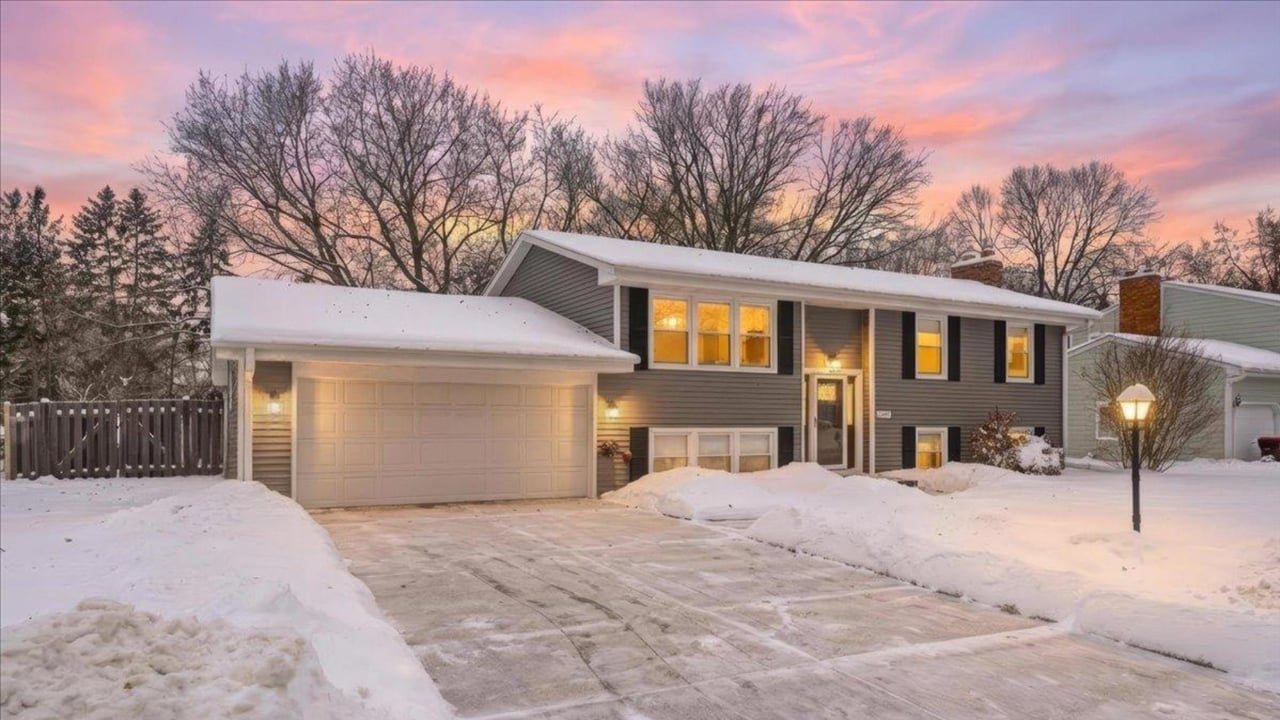
The day a Woodbury home goes live on the MLS, two clocks start running. The first is the showings clock (Zillow views, saved listings, scheduled showings, and the open house turnout) that, together, tells the agent and the seller whether the listing is priced and presented correctly. The second is the calendar clock, days on market that, once the number passes 14 in the east metro, starts to draw a different kind of attention from buyer agents.
Most sellers think of the listing period as a passive stretch where buyers come through and offers eventually arrive. The reality in Woodbury is that the active listing period is the most data-rich phase of the entire transaction. The signals are clear if a seller and agent know what to look for, and most pricing or repositioning decisions get made (or missed) inside the first 14 days.
This guide walks through the active listing period for a Woodbury seller. Showings logistics, the feedback loops that matter, open house strategy in Stonemill Farms, Wedgewood, Dancing Waters, Bailey's Arbor, and Powers Lake, and the first 14-day playbook that Darin Bjerknes has refined across 20+ years of east metro listings.
The First 72 Hours After Going Live
The first 72 hours of a listing are not representative of the rest of the listing period. They are the spike. Every buyer who has been watching Woodbury inventory, every buyer agent's saved-search alert, and every relocator with a Zillow alert set to the price band gets pushed the new listing within minutes of MLS activation.
What a healthy first 72 hours looks like for a $700,000 to $900,000 Woodbury home:
- 800 to 2,000 Zillow views in the first 48 hours
- 25 to 80 Zillow saves
- 3 to 8 scheduled showings
- 5 to 15 saved-search hits across other portals (Realtor.com, Redfin, Homes.com)
- 1 to 3 buyer-agent inquiries beyond scheduled showings (questions about the home, comp questions, contingency feasibility)
What an underperforming first 72 hours looks like:
- Under 400 Zillow views
- Under 10 Zillow saves
- Zero scheduled showings
- No buyer-agent inquiries
Underperformance in the first 72 hours is almost always one of three things: price, photos, or a mismatch between the listing description and what the home actually is. It is rarely "the market is slow" because the spike is a function of the saved-search infrastructure, not current buyer urgency.
Showings Logistics for a Woodbury Listing Period
The showings phase has a small number of decisions that are worth getting right.
Lockbox versus appointment-only. Most Woodbury listings use a Supra lockbox tied to ShowingTime, which lets buyer agents request showings through a confirmed appointment system. The seller approves or declines each request through text. Appointment-only without a lockbox is appropriate for tenant-occupied homes, vacant homes with high-value contents, and listings where the seller wants to control access tightly. Lockbox plus ShowingTime confirmation is the default for owner-occupied Woodbury listings.
Showing windows. A Woodbury seller should generally accept any showing requested between 8 AM and 8 PM with at least 90 minutes of notice. Tighter windows (only weekends, only certain hours) cost showings and cost offers. The data on showing-to-offer conversion is clear: each declined showing is roughly a 6 to 10 percent reduction in offer probability.
Showing prep checklist. A showing-ready Woodbury home has every light on, all blinds up, dogs and pets out of the home, no shoes in the entry, no laundry in baskets, made beds, clear counters, and a faint clean scent (not a heavy one). The seller and family leave the home at least 15 minutes before the showing window and return at least 30 minutes after the window closes.
Pet protocol. Pet odor, visible pet bowls, crates, and litter boxes shrink offers. Dogs should be at daycare or with a neighbor during the listing period, or at minimum out of the home and not heard from during showings. Cat owners should run an air purifier and consider a deep carpet clean before listing. Buyers who are mildly allergic, on the fence, or pet-averse will not write offers on homes where the pet presence is obvious.
Feedback collection. ShowingTime sends an automated feedback request to the buyer agent after each showing. Response rates run 30 to 60 percent. The agent reviews each piece of feedback in real time and aggregates patterns weekly. Single comments are noise. Patterns across 4+ showings are signal.
Open House Strategy by Neighborhood
The open house is not a universal best practice in Woodbury. Some neighborhoods reward open houses heavily. Others do not. A first-weekend open house decision should be neighborhood-specific.
Stonemill Farms. High open-house yield. The neighborhood draws walk-up traffic from current Stonemill residents thinking about moving up within the neighborhood, plus drive-in traffic from Woodbury and Cottage Grove buyers who specifically want Stonemill amenities. A Saturday 12 to 2 PM open house on the first weekend is standard. A second open house on the following Sunday is appropriate for any Stonemill listing that has not received an offer in the first 7 days.
Wedgewood. Moderate open-house yield. Wedgewood gets walk-in traffic from neighbors and from buyers cross-shopping the lower price band. First-weekend open house is worth running. Second-weekend open house is worth running if showings dropped below 4 in week one.
Dancing Waters. Variable yield by sub-association. Dancing Waters' newer construction tracts get strong open-house traffic. The original tracts get less. The agent should pull the most recent six months of open-house performance for the specific sub-association before deciding.
Bailey's Arbor. Strong open-house yield, especially for any listing on or near a master-association amenity. First-weekend open house is standard. The master-association entry monuments and walking paths draw buyers who are already in the neighborhood for other reasons.
Powers Lake. Targeted open-house strategy. Lake-frontage homes draw a narrower buyer pool, and most Powers Lake offers come from buyers who scheduled a private showing rather than walked through an open house. A first-weekend open house is still worth running for the data, but the conversion expectation is lower than the Stonemill or Bailey's Arbor model.
The general rule across Woodbury: a first-weekend open house produces 2 to 4 days of traffic data and 1 to 2 hand-raisers who scheduled second showings. That data is worth the 2 hours of seller inconvenience even when the open house itself does not produce a direct offer.
The First 14-Day Playbook
The first 14 days of a Woodbury listing follow a predictable rhythm if the listing is priced and prepped correctly. The same window also reveals quickly when something is off.
Days 1 to 3: The launch spike. Highest traffic, highest showing volume. Most listings that will receive a first-weekend offer get the offer within this window.
Days 4 to 7: The early shoulder. Showing volume normalizes to 50 to 70 percent of launch. Saved-search hits drop sharply. Open-house weekend produces 2 to 4 days of data. By day 7, the agent should have 6 to 12 showings of feedback and a directional read on price perception, presentation, and any specific objections (basement layout, school zone, lot orientation).
Days 8 to 14: The decision window. Showing volume settles. By day 14, the agent and seller have enough data to know whether the listing is on track for a 21-to-30-day sale or whether a pricing or presentation adjustment is warranted. Most successful east metro adjustments happen between days 10 and 18.
The day 14 review. A formal review meeting between agent and seller on day 14 should cover:
- Total Zillow views, saves, and saved-search inclusion
- Total showings and feedback themes
- Buyer-agent inquiry volume
- Open house attendance and conversion
- Comparable new listings in the neighborhood and their initial activity
- Any new sold comps in the neighborhood since list date
- Whether the listing is on track for a 28-day sale, a 45-day sale, or a longer market time
If the listing is on track, the next decision point is day 21. If the listing is not on track, the seller and agent decide between a pricing adjustment, a presentation refresh, or a hold-and-wait based on inventory dynamics.
Reading the Feedback (What Patterns Actually Mean)
Buyer-agent feedback is messy data. Some agents fill out the form thoughtfully. Others copy a stock response. Single comments are not a basis for decisions. Patterns across multiple showings are.
The most common feedback patterns in Woodbury and what they typically indicate:
"Priced too high." Across 3+ showings, this is the cleanest pricing signal a seller will get. The market is telling the seller the gap between asking and perceived value. This is rarely subjective.
"Layout did not work." Usually a specific layout objection (closed kitchen, basement bedroom configuration, lack of main-floor primary). Layout cannot be fixed mid-listing. The objection is data for pricing recalibration.
"Wanted more updates" or "Dated." A presentation issue. May be addressable mid-listing through targeted refreshes (paint a heavy accent wall, swap lighting, restage). Often a pricing adjustment is faster.
"Backed up to busy road" or "Lot orientation." Location is fixed. The objection is data for pricing recalibration.
"Basement was a concern." Could be moisture, layout, ceiling height, or finish quality. Worth probing through the buyer agent. May be addressable through partial repair or targeted disclosure.
"Buyer chose another home." Standard. Useful only if the buyer agent identifies the competing home, which lets the listing agent assess what is actually winning the comp battle.
A listing agent's job is to translate this raw feedback into one of three decisions: stay the course, adjust price, or adjust presentation. The translation is judgment-heavy and should be made with the seller, not at the seller.
When and How to Adjust Mid-Listing
Most Woodbury listings that need an adjustment need it between days 10 and 21. Earlier than 10 is usually premature. Later than 21 risks the listing becoming "stale" in buyer-agent view.
The adjustment options:
Price reduction. The most direct lever and the most common adjustment. A meaningful price reduction in the Woodbury move-up range is 2 to 5 percent. A 1 percent reduction rarely re-triggers saved-search alerts and rarely changes buyer behavior. A 3 to 4 percent reduction does both. The threshold for the saved-search re-alert is the round price band the listing previously crossed (a $749,900 listing dropping to $724,900 re-enters the $725K saved searches).
Presentation refresh. Targeted work to address feedback themes. Restage one or two rooms. Swap dated lighting. Repaint a heavy accent wall. Re-photograph the listing if the photos themselves have become a liability.
Withdraw and re-list. Reserved for situations where the listing has substantial flaws that need 2 to 4 weeks to address. Withdrawing resets the days-on-market clock in some buyer-agent views, though sophisticated agents see the history.
Hold the price, wait the inventory. Sometimes the listing is priced correctly and the inventory is simply slow that month. A 30-day hold with no adjustment is the right call when comparable comps are also sitting and feedback is positive on price.
The wrong adjustment is the small adjustment that signals weakness without re-triggering buyer interest. A $749,900 listing dropping to $744,900 is a worse move than holding at $749,900 or dropping to $724,900.
The Online Traffic Signals That Matter
Zillow views, saves, and the views-per-save ratio are the easiest-to-track engagement signals on a Woodbury listing. The numbers worth watching:
Total Zillow views in the first 7 days. A correctly priced and presented Woodbury listing in the $500K to $1.2M range should clear 1,500 to 4,000 views in the first 7 days. Below 800 is a significant underperformance signal.
Zillow saves in the first 7 days. Saves are a stronger interest signal than views. A healthy listing draws 30 to 100 saves in the first 7 days. Saves below 15 with normal view volume usually indicates a presentation or pricing perception issue.
Views-per-save ratio. Total views divided by total saves. A healthy ratio is 20-to-1 to 50-to-1. A ratio above 80-to-1 means the listing is drawing curiosity but not interest, usually a pricing perception issue. A ratio below 15-to-1 means the listing is drawing strong interest from a narrow pool, usually a niche home that will sell to the right buyer rather than the volume buyer.
Days on Zillow versus days on MLS. Days on Zillow includes some pre-MLS exposure for syndicated listings and can lag behind MLS days slightly. Both are buyer-visible. A listing approaching 14 days on Zillow needs a clear answer to "why is this still on the market" before day 21.
The seller does not need to obsess over these numbers daily. The agent should review them weekly and flag deviations from the expected curve.
Multiple Offers and How They Show Up on a Woodbury Listing
Multiple-offer scenarios on Woodbury listings happen in two patterns:
The launch-weekend multiple-offer. The listing hits the market with strong photos, a sharp price, and pent-up buyer-agent demand. Multiple offers come in over the first weekend, and the seller and agent run a structured highest-and-best process with a Sunday or Monday deadline. This pattern is most common for listings priced 2 to 4 percent below comp value, listings in scarce neighborhoods (Powers Lake lake-frontage, Stonemill Farms in tight inventory months), and listings with a unique feature buyers have been waiting for.
The post-adjustment multiple-offer. A listing that did not draw a launch-weekend offer adjusts price on day 14, re-enters saved-search alerts at the new price band, and triggers fresh buyer interest. Multiple offers can result in this pattern as well, often in week 3.
The structured highest-and-best process is the seller's most powerful tool when multiple offers materialize. A typed deadline (Sunday at 6 PM, all offers in by email), a clean side-by-side review with the listing agent, and a calibrated counter strategy regularly nets 2 to 6 percent above the highest initial offer.
The seller should never reveal specific competing offer terms to a buyer agent. The agent should communicate that multiple offers are present and that highest-and-best is being requested. Specifics belong inside the seller-agent conversation, not the buyer-agent conversation.
A deeper walk-through of multiple-offer mechanics, contingency comparison, and inspection-period negotiation lives on the next page in the series.
How a Listing Agent Earns Their Fee During Active Listing
The active listing period is where the listing agent's day-to-day work shows up most visibly to the seller.
What Darin Bjerknes does during the active listing period for a Woodbury home:
- Confirms or declines every showing request through ShowingTime within 30 minutes of receipt
- Reviews and tags every piece of buyer-agent feedback as it arrives
- Sends a written weekly performance summary every Monday morning
- Flags any deviation from the expected traffic curve within 48 hours
- Pulls comparable new-listing activity in the neighborhood weekly
- Hosts open houses personally rather than handing off to a junior agent
- Reaches out to buyer agents on showings with strong but ambiguous feedback
- Coordinates the day 14 review meeting and presents the data, the options, and a recommendation
- Manages any pricing adjustment communication, re-photography, or restaging if needed
A seller in the middle of an active listing should expect proactive communication, not reactive availability. If the seller is the one chasing the agent for updates, the agent is not running the listing.
Frequently Asked Questions
How many showings should a typical Woodbury listing receive in the first week?
A correctly priced and presented Woodbury home in the $500,000 to $1.2M range typically gets 6 to 12 showings in the first 7 days, with the heaviest concentration in the first 72 hours. Below 4 showings in week 1 is a significant underperformance signal.
Should sellers be home during showings?
No. The seller and family should leave at least 15 minutes before each showing window and return at least 30 minutes after. Buyers cannot evaluate a home freely with the seller present, and offers shrink when sellers are home during showings.
Is an open house worth running for a Woodbury listing?
For most Woodbury neighborhoods, a first-weekend open house produces useful traffic data and 1 to 2 second-showing hand-raisers. Stonemill Farms and Bailey's Arbor get the strongest open-house yield. Powers Lake lake-frontage homes get less direct conversion but still benefit from the data.
When should a Woodbury seller consider a price reduction?
The day 14 review is the standard decision point. A 2 to 5 percent reduction is more effective than a 1 percent reduction because it re-triggers saved-search alerts and signals genuine repositioning to buyer agents.
What does the views-per-save ratio on Zillow indicate?
A 20-to-1 to 50-to-1 ratio is healthy. Above 80-to-1 usually indicates a pricing perception issue. Below 15-to-1 usually indicates a niche home with strong narrow-pool interest.
How should buyer-agent feedback be interpreted?
Single comments are noise. Patterns across 3 or more showings are signal. The most actionable patterns are pricing comments, layout objections, presentation comments, and competing-home references.
What is the cost of declining showings or limiting showing windows?
Each declined showing roughly cuts offer probability by 6 to 10 percent. Tight showing windows (weekends only, evenings only) measurably reduce showing volume and offer rate.
How long should a Woodbury listing wait before adjusting price?
Earlier than day 10 is usually premature. Day 14 is the standard formal review. By day 21, an adjustment should either be in place or the seller should have a clear data-based reason to hold.
What is the difference between days on MLS and days on Zillow?
Days on Zillow can include some pre-MLS syndication exposure and may lag MLS days slightly. Both are visible to buyers. By day 14 on Zillow, a listing needs a clear narrative for buyer agents seeing it for the first time.
How do multiple offers typically materialize on a Woodbury listing?
Two patterns: launch-weekend multiple offers driven by sharp pricing and pent-up demand, or post-adjustment multiple offers triggered by a re-entry into saved-search alerts at a new price band. Both warrant a structured highest-and-best process.
Next in the Seller's Guide Series
Once offers start arriving, the next decisions become the most consequential of the entire transaction. Read Offers, Negotiation & Inspection Response in Woodbury MN for multiple-offer strategy, contingency analysis, counter-offer sequencing, and inspection negotiation mechanics.
For a seller currently in an active listing period or about to launch one, Darin Bjerknes runs a pre-listing strategy session that maps showing logistics, open house plan, and the day 14 review framework before going live. Reach out via darinbjerknes.com or text HOME to start the conversation.
Earlier in the series: Deciding to Sell in Woodbury MN, Pricing Your Woodbury MN Home, and Prepping Your Woodbury MN Home for Market. The cluster cornerstone is the Woodbury MN Real Estate Guide.