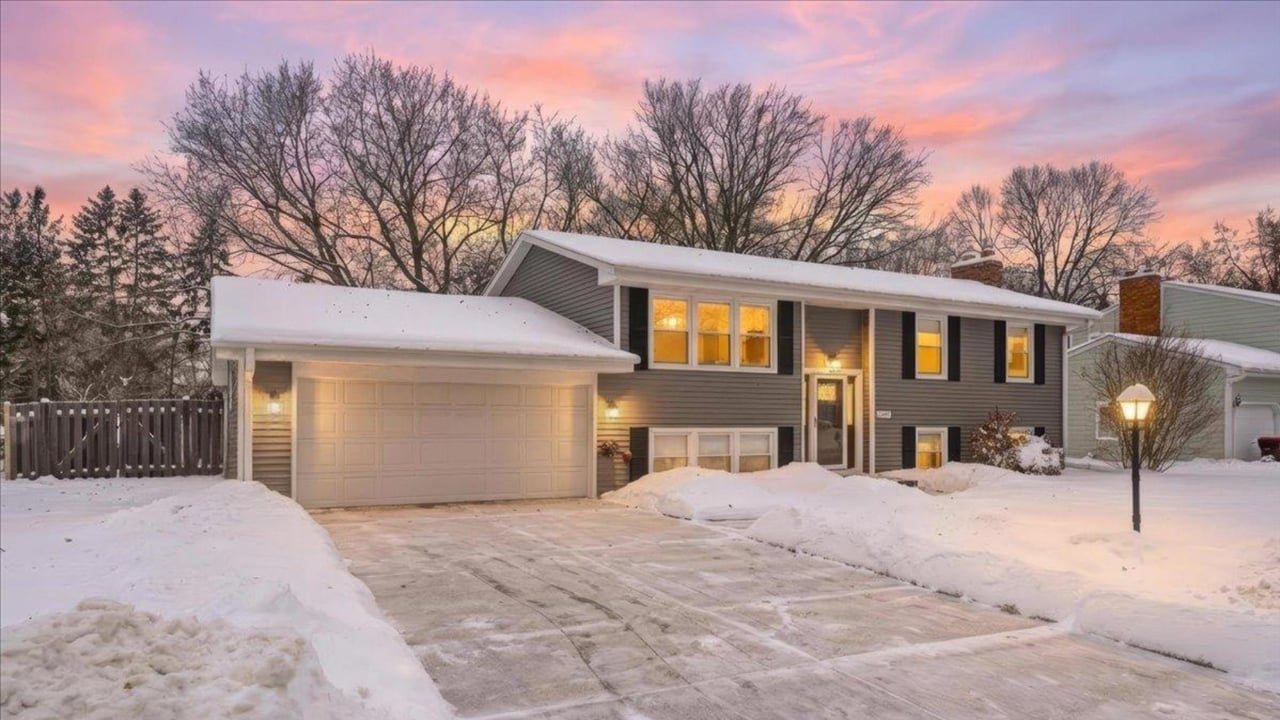
A working guide to the timing, financial, and life questions every Woodbury homeowner faces before listing. Move-up, downsize, or relocate.
Selling a home is a financial decision with a life-decision wrapper around it. Before any sign goes in the yard, every Woodbury homeowner runs the same three checks: is the timing right for the market, is the timing right for our life, and does the math actually work.
This is the first guide in a six-part series for Woodbury home sellers, covering everything from the deciding-to-sell moment through the closing table. It is written for every kind of Woodbury seller. Move-up homeowners trading a starter for a bigger home. Empty nesters downsizing from a four-bedroom Stonemill Farms colonial to a townhome or a single-level rambler. Relocators heading out of state for a job. Estate sellers handling a parent's home. The math and the timeline differ by category, but the decision framework is the same.
Darin Bjerknes has been listing homes in Woodbury and the surrounding east metro for 20+ years. The sections below are the framework he walks every seller through before any listing decision is made.
The "right time to sell" question, on three lenses
There is no universally right time to sell. There are three lenses, and the answer is the moment all three line up.
Life timing. This is the lens most homeowners overweight, and reasonably so. A growing family that has outgrown three bedrooms. An empty nest that is too much house. A new job that is fifty miles in the wrong direction. A health change that needs a single-level layout. When life timing is forcing the move, market timing matters less than people think, because waiting for a better market means living with the wrong house in the meantime.
Market timing. This is the lens sellers want to optimize but rarely can. The Woodbury market in 2026 sits in a different posture than the frenzy of 2021 or the slowdown of 2023. Days on market vary by price band and neighborhood. The quartile that sells fast is move-up and luxury homes priced correctly with strong photography. The quartile that lingers is overpriced homes, dated finishes without a price discount, or homes priced into a neighborhood ceiling. Market timing is real, but it is more about pricing your specific home correctly than about choosing a calendar window.
Financial timing. Equity, payoff, and what the next housing cost looks like. A homeowner who bought at 3.0% in 2020 and is considering selling into a 6.5% rate environment is looking at a different math problem than a homeowner trading up with cash. The capital gains exemption matters. The carrying cost between sale and next purchase matters. Whether the next home is a Woodbury upgrade, a smaller Cottage Grove townhome, or a Florida condo changes everything about what "ready to sell" means.
When all three lenses say go, that is the right time. When two say go and one says wait, the conversation is about whether the holdout lens can be solved (price adjustment, bridge financing, contingency offer, etc.).
Three Woodbury seller categories, three different math problems
The deciding-to-sell calculation looks different depending on which category a homeowner falls into.
Move-up sellers. The most common Woodbury seller. A family in a 1,500-square-foot starter home in Hidden Valley or older Wedgewood looking to upgrade to a 3,000-square-foot newer build in Stonemill Farms or Dancing Waters. The math is dominated by two questions: what does the equity in the current home translate to as a down payment on the next, and does the monthly payment on the next home work at current rates. For these sellers, the buyer-side process matters as much as the seller side. The full buyer-side framework is covered in the Woodbury buyer's guide starting with Deciding to Buy.
Downsizers. Empty nesters or near-empty nesters trading a four or five-bedroom Woodbury home for a townhome, a single-level patio home, or a smaller single-family. The math here is often the most favorable. Downsizers usually have substantial equity, no contingencies on a smaller next purchase, and the option to pay cash if the equity is large enough. The complication is emotional, not financial. Twenty years of memories in one house, and a smaller house to sort everything into.
Relocators. Sellers leaving Minnesota entirely. Job transfer, retirement to a warmer climate, family changes. The math is complex because the next home is in a different market with different price points, different cost of living, and often a different timeline. Relocators usually need a coordinated sale-and-purchase plan, often with a bridge or interim arrangement.
Each category has different timeline pressures, different financial considerations, and different questions to answer before listing.
Sell first or buy first: the central move-up question
For move-up sellers and most relocators, the biggest single decision before listing is whether to sell first or buy first.
Sell first. Lower stress, cleaner financing for the next purchase, no bridge financing required. The downside is the gap. After closing on the sale, the seller needs somewhere to live until the next home closes. Options: a rent-back agreement with the buyer (typically 30 to 60 days), short-term rental, or temporary stay with family. For sellers who can flex on timing and do not need to be in the next home immediately, sell-first is the cleaner path.
Buy first. Higher stress, requires bridge financing or carrying two mortgages briefly, but eliminates the gap. The seller buys the next home, moves in, then lists the current home. This works for sellers with strong income, substantial reserves, or access to bridge financing. Adam Roloff at Bell Bank can structure bridge or HELOC products for buy-first scenarios when the math supports it.
Buy with a contingency. A middle path. The seller writes an offer on the next home contingent on selling the current one. Common in Woodbury and the east metro. The contingency makes the offer weaker than a clean offer, especially in competitive situations, but it removes the financial overlap risk.
Buy first, sell soon after, then recast the new loan. A move-up strategy that more Woodbury sellers should know about. The seller buys the next home using a clean offer (often financed with a larger-than-typical down payment, bridge financing, or proceeds from a HELOC on the current home), closes on the new home, then lists and sells the current home a few weeks later. Once the sale closes, the seller takes the freed-up equity, applies it as a lump-sum principal payment to the new mortgage, and requests a loan recast from the lender. A recast is not a refinance. Same loan, same interest rate, same remaining term. The lender simply re-amortizes the loan based on the lower principal balance, which drops the monthly payment significantly. Most conventional loans allow recasting for a small fee (typically $150 to $500) and a minimum lump-sum threshold (usually $5,000 to $10,000). FHA and VA loans usually do not allow recasts. The advantage of this strategy is it preserves the original (often lower) interest rate locked in at purchase, while still getting the monthly payment relief that a refinance would provide. For sellers who locked into a 6.0% rate on the new home and would not want to refinance later at the same or higher rate, recasting is the better tool. Adam Roloff at Bell Bank structures these scenarios regularly and walks borrowers through the recast eligibility before the new home closes.
The right path depends on the specific seller's risk tolerance, financial flexibility, and how much the market for the next home favors clean offers. Darin walks through this with each seller individually because the answer changes based on factors no online article can see.
What is my Woodbury home actually worth
The most common pre-listing conversation. The honest answer is that no automated valuation, including Zestimate or Realtor.com's number, captures what a Woodbury home is worth in the current market. Those tools use sale comps and tax assessments, but they cannot see condition, finishes, neighborhood positioning, or the buyer demand at a specific price point.
A proper valuation is a Comparative Market Analysis (CMA), which looks at:
- Recent solds in the immediate neighborhood (last 90 to 180 days)
- Currently active listings in the same neighborhood and price band
- Pending sales (the most recent demand signal)
- Withdrawn or expired listings (the ceiling signal)
- Adjustments for square footage, finished basement, garage size, lot, and condition
- Neighborhood-specific factors (school zone, HOA, amenity access, proximity to amenities)
For Woodbury specifically, the comp set has to be neighborhood-tight. A solid Stonemill Farms colonial does not comp against a Wedgewood split-level just because they are a mile apart. The buyer pools are different, the price ceilings are different, and the days on market patterns are different.
A pre-listing CMA is the conversation that comes before any pricing decision. Pricing strategy is covered in detail on the next guide in this series: Pricing Your Woodbury Home.
The real cost of selling a Woodbury home
Sellers often focus on net proceeds, which is the right thing to focus on. The math from gross sale price to net proceeds includes:
Real estate commission. Typically 5% to 6% of the sale price, split between the listing agent's brokerage and the buyer's agent's brokerage. Negotiable. Recent industry changes mean buyer-side commission is now negotiated separately and is more variable than it used to be. Darin walks through the structure with every seller before listing.
Pre-listing prep. Varies wildly by home condition. A move-in-ready home in Stonemill Farms might need $500 in cleaning and a few touch-up paint patches. An older Wedgewood split-level with original carpet, dated bathrooms, and a fence that needs staining might need $5,000 to $20,000 of strategic prep. The right prep budget is the one that returns more in sale price than it costs.
Staging. Optional but often valuable, especially for higher price points. Vacant homes show worse than staged ones in almost every category. Light staging (just key rooms) starts around $1,500 to $3,000. Full staging on a luxury home can run $5,000 to $15,000.
Photography and marketing. Included in most listing agreements. Drone shots, twilight photography, video walk-throughs, and 3D tours are standard for higher price points. Darin's listings include all of these as part of the listing fee.
Closing costs (seller side). State deed tax, title company fees, recording fees, prorated property taxes, and HOA transfer fees if applicable. Typically 1% to 1.5% of the sale price.
Capital gains tax. For most Woodbury homeowners, this is not a factor. The IRS Section 121 exclusion exempts the first $250,000 of gain ($500,000 if married filing jointly) on the sale of a primary residence, assuming the seller has lived in the home for two of the last five years. Sellers with gains above the exclusion, or with shorter residency, should consult a CPA before listing.
Mortgage payoff. The current loan balance, plus prorated interest through closing.
The realistic net-proceeds calculation runs about 7% to 9% of gross sale price for most Woodbury sellers. A $600,000 home generates roughly $545,000 to $560,000 net before mortgage payoff.
Realistic timeline expectations
For Woodbury sellers planning around a school year, a job start date, or a cross-country move, the timeline matters as much as the price.
Pre-listing prep: 2 to 6 weeks for most homes. Faster for move-in-ready homes, longer if cosmetic updates are needed.
On-market period: Days on market varies by price band and condition. A correctly priced, well-presented Woodbury home in the move-up range often sees offers within 7 to 21 days. Luxury homes ($1M+) typically take 30 to 90 days. Underpriced homes go fast. Overpriced homes can sit for 60 to 120 days before a price adjustment.
Pending period: From accepted offer to closing is typically 30 to 45 days for financed buyers, faster for cash. This is the inspection, appraisal, and final loan approval window. The detail on what happens during this period is covered in Inspections and Appraisals for a Woodbury MN Home.
Closing day to possession transfer: Usually same-day or next-day possession. Rent-back arrangements can extend this.
A reasonable end-to-end estimate, from "we are deciding to sell" to "the new owner has the keys," is 8 to 14 weeks for most Woodbury sellers.
When deciding to sell does NOT make sense (yet)
Honest counter-position. There are scenarios where the right answer is to wait, not list.
The home needs significant repairs that the seller cannot fund and that would crater the price if listed as-is. A pre-listing strategic prep plan often unlocks $30,000 to $80,000 of additional sale price for a $5,000 to $15,000 prep investment. Selling in disrepair leaves money on the table.
The seller is moving up but the next-home math does not work. If the down payment from the current sale plus current income does not support the desired next home, the better answer is to wait, save, or recalibrate the next-home target.
The market is in a temporary trough on the seller's specific neighborhood and there is no time pressure. Six months can change a lot.
The seller has not run the capital gains math and might owe meaningful federal tax. A 30-minute call with a CPA before listing can save tens of thousands.
When any of these are true, the conversation Darin has with the seller is about waiting, not listing.
Working with Darin
Most listing relationships start with a phone call and a walk-through. Darin spends 60 to 90 minutes on the first visit, looking at the home, asking about the move-up or downsize timing, the financial situation, the neighborhood comps, and the seller's flexibility on price and timing. After that visit, he prepares a CMA and a strategy memo within 48 hours.
There is no listing agreement signed at the first meeting. The CMA conversation happens after the seller has had time to review the analysis. Most Woodbury sellers Darin works with are referrals from past clients, neighbors, or move-up buyers who are now selling the home he helped them buy years earlier.
If you are thinking about selling in Woodbury, set up a time to chat, or call 612-702-5126.
Deciding to Sell in Woodbury FAQ
Is now a good time to sell my Woodbury home? It depends on three lenses: life timing, market timing, and financial timing. The right time is when all three line up, or when two line up and the third is solvable. Darin walks through this with every seller individually using current Woodbury comps and the seller's specific situation.
Should I sell my Woodbury home first or buy the next one first? Sell first is lower stress and cleaner financing. Buy first eliminates the gap but requires bridge financing or strong reserves. A contingent offer is a middle path. The right answer depends on the seller's risk tolerance, financial flexibility, and the market for the next home. This is one of the most important conversations to have before listing.
How much does it actually cost to sell a home in Woodbury? Realistic total selling cost runs 7% to 9% of the gross sale price. That includes commission, pre-listing prep, staging, closing costs, and prorated taxes. A $600,000 Woodbury home nets roughly $545,000 to $560,000 before mortgage payoff.
What's my Woodbury home worth? Online estimates like Zestimate are starting points but not accurate for pricing decisions. A proper Comparative Market Analysis (CMA) from a Woodbury-specific agent looks at recent solds, active listings, pending sales, and adjustments for condition and finishes within the same neighborhood and price band.
How long does it take to sell a home in Woodbury? End-to-end, from deciding to sell to keys-handed-over, is typically 8 to 14 weeks for most Woodbury homes. That breaks into 2 to 6 weeks of prep, 1 to 4 weeks on market for correctly-priced homes (longer for luxury or overpriced), and 30 to 45 days from accepted offer to closing.
Do I have to pay capital gains tax when I sell my Woodbury home? For most Woodbury homeowners selling a primary residence, no. The IRS Section 121 exclusion exempts the first $250,000 of gain (or $500,000 for married couples filing jointly) if the seller has lived in the home as a primary residence for two of the last five years. Sellers with gains above the exclusion or shorter residency should consult a CPA.
What is the difference between a CMA and an appraisal? A CMA is a Comparative Market Analysis prepared by a real estate agent before listing, used to set pricing strategy. An appraisal is a formal valuation by a licensed appraiser, typically ordered by the buyer's lender after an offer is accepted, used to confirm the sale price for loan purposes.
Should I make repairs and upgrades before listing? Strategic prep usually pays. The right repairs and updates depend on the home's condition and the price band. A walk-through with Darin identifies which repairs return more than they cost and which to skip. Pricing the dated finishes into the listing is sometimes the better strategy than fixing them.
What if I have a tenant or family member living in the home? Selling a tenant-occupied home is possible but more complex. Showings have to be scheduled around the tenant, the tenant's lease terms affect possession, and condition often suffers under tenancy. Plan an extra 4 to 8 weeks compared to selling vacant.
Can I buy my next home first, sell my current home, and then lower my new mortgage payment? Yes. This is a move-up strategy called a loan recast. Buy the next home (often with bridge financing or a larger down payment), close on it, list and sell the current home, then apply the freed-up equity as a lump-sum principal payment on the new mortgage and request a recast from the lender. A recast keeps the original interest rate and remaining term, but re-amortizes the loan against the lower balance, which lowers the monthly payment. Most conventional loans allow this for a small fee. FHA and VA loans usually do not. Adam Roloff at Bell Bank structures these scenarios regularly.