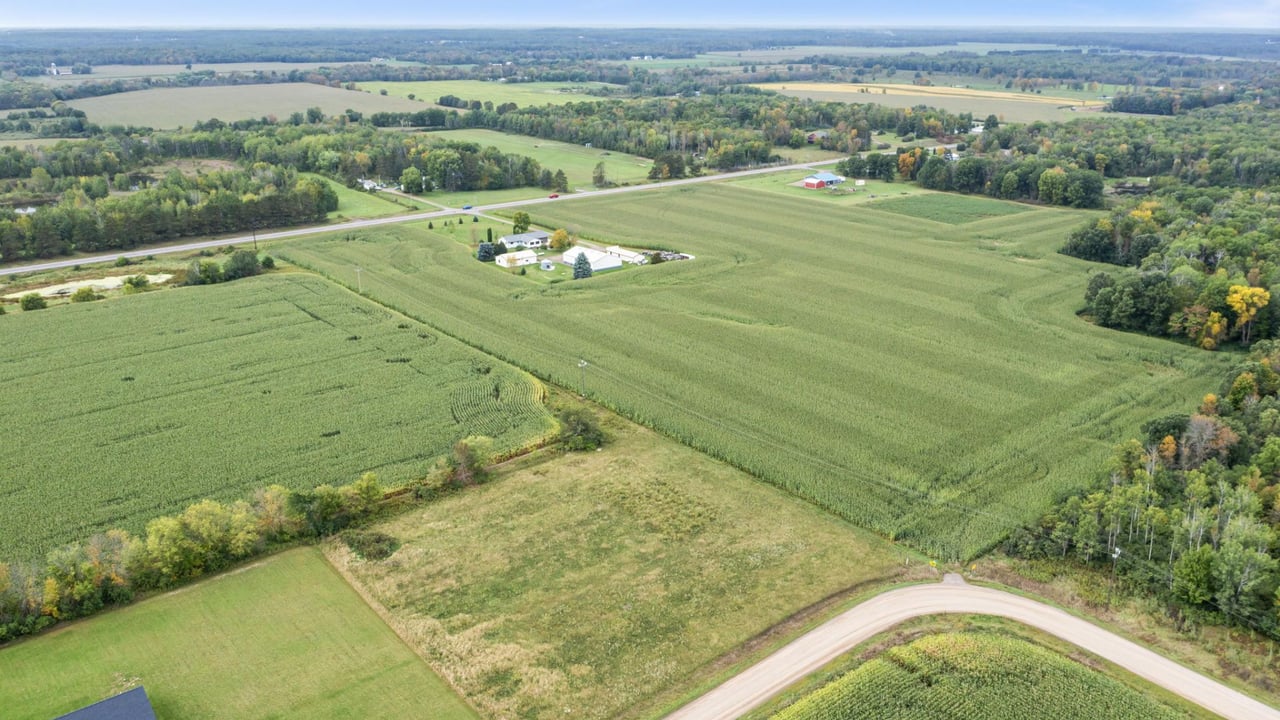
What happens to Green Acres deferred taxes when you sell your Minnesota land?
When land enrolled in Minnesota's Green Acres program (Minn. Stat. 273.111) is sold, the deferred taxes for the current year plus the two prior years come due, along with deferred special assessments plus interest once the entire parcel leaves the program. There is one major exception: if your buyer keeps the land in qualifying agricultural use and files a new Green Acres application with the county assessor within 30 days, no payback is due at the sale. Who your buyer is determines whether the bill exists at all.
By Darin Bjerknes | August 24, 2026
Here's a conversation I have every year with acreage owners in Grant, Afton, and Lake Elmo. You've owned 20 acres for two decades. A neighbor farms the back 15, you keep horses on part of it, and the property tax bill has always felt manageable. Now you're ready to sell, and somewhere between the listing appointment and the title company's preliminary work, a line item surfaces that nobody warned you about: deferred Green Acres taxes, payable at closing.
The program that kept your taxes low all those years wasn't forgiving them. It was deferring part of them. The sale is the event that can make a slice of that deferral come due.
The good news: the payback is capped, it's predictable, and in the right sale structure it disappears entirely. Here's how it works in Washington County and the east metro, and how I position acreage listings so my sellers aren't writing a surprise check at the closing table.
How Green Acres works, and why a payback exists
Green Acres is the nickname for the Minnesota Agricultural Property Tax Law, Minn. Stat. 273.111, passed in 1967 for exactly the situation Washington County sits in today: farmland along a growth corridor being valued, and taxed, like future subdivisions instead of like farms.
When your land is enrolled, the county assessor carries two values on it every year. One is the estimated market value, what the land would bring on the open market with development demand baked in. The other is the agricultural value, tied to what the land is worth purely as farmland. You pay taxes on the lower agricultural value. The difference between the two tax amounts doesn't vanish; it's deferred, year after year, for as long as the land stays enrolled and qualified.
A few mechanics that matter when a sale is coming:
- The deferral covers the land, not your house. The house, garage, and immediately surrounding acre are valued and taxed like any other home. The Green Acres benefit, and the payback, live on the enrolled acreage.
- Eligibility runs through class 2a agricultural land: generally at least 10 acres primarily devoted to producing agricultural products for sale, with ownership or homestead requirements. Class 2b rural vacant land (woods, sloughs, unused pasture) doesn't fit Green Acres, but a companion program, Rural Preserve under Minn. Stat. 273.114, does the same deferral job for qualifying 2b acres that are part of an agricultural homestead.
- Special assessments can be deferred too. If the city or township levied assessments for improvements, Green Acres lets you defer them, but interest keeps accruing while they sit.
That's the deal you signed up for: lower taxes now, a defined payback later.
The payback, and the three ways your sale can play out
When enrolled land is sold, transferred, subdivided, or otherwise withdrawn, the deferred tax for the current payable year plus the two prior years becomes due. Not the full history. If the land was enrolled for 25 years, the county doesn't reach back 25 years; the payback is capped at three. And once an entire parcel comes out of the program, deferred special assessments plus interest come due as well. Minn. Stat. 273.111, subd. 11 spreads those payments over the remaining life of the improvement bonds, or makes them payable within 90 days if the bonds have matured.
From my side of the table, every Green Acres sale resolves one of three ways.
1. Your buyer re-enrolls, and the payback never happens
This is the outcome most sellers don't know exists. If the buyer continues qualifying agricultural use and files a new Green Acres application with the county assessor within 30 days of the transfer, the enrollment continues and no back taxes or deferred assessments are due at the time of sale.
In the east metro that buyer is real: the hobby farmer looking for tillable acres in May Township, the horse-property buyer near Stillwater, the neighboring farmer expanding an operation in Denmark Township. Selling a 40-acre parcel to another ag user instead of a builder can be the difference between a five-figure payback and no payback at all.
That 30-day window is unforgiving, though. I put the re-enrollment obligation directly into the purchase agreement, with a deadline, so it isn't left to the buyer's memory during the month they're also moving.
2. Your buyer doesn't qualify, and the payback lands at closing
Sell to a developer, a builder, or a buyer who wants the acreage as a big yard rather than a farm, and the three-year payback comes due. Standard Minnesota purchase agreement language makes deferred taxes, including Green Acres deferrals, the seller's obligation on the date of closing. That's the default, not a law of nature: the allocation is negotiable, and in land sales to developers the payback is sometimes priced into the deal on the buyer's side. But you should walk in assuming it's your line item and negotiate from there.
The title company collects the figure at closing along with your payoff, the Minnesota deed tax (0.33% of the sale price), and the rest of your seller costs. For the full picture of those numbers, my breakdown of what it costs to sell a home in Woodbury covers the stack.
3. You split the parcel, and the payback follows the withdrawn acres
Carving off a five-acre building site and keeping the rest enrolled? The payback applies to the acreage withdrawn, current year plus two prior, and the new owner of the split piece has the same 30-day application window if their piece independently qualifies. Deferred special assessments stay deferred until the entire parcel is out. Subdividing before a sale can be a smart value play in Lake Elmo and Grant, but model the payback per acre before you commit to a split.
Getting your number before you list
Nothing in this post should be a guess by the time your sign goes up. Here's the sequence I run with east metro acreage sellers.
Confirm what you're actually enrolled in. Green Acres (273.111), Rural Preserve (273.114), and Metropolitan Agricultural Preserves (Minn. Stat. ch. 473H) are three different programs with very different exits. Ag Preserves is the one that catches people: leaving it requires notice, and the preserve status runs at least eight more years from that notice. If your land is in Ag Preserves rather than Green Acres, your sale question isn't a tax payback, it's an eight-year clock. Your tax statement and a call to the Washington County Assessor at the Government Center in Stillwater will tell you which world you're in.
Ask the assessor for the deferred-tax figure. They carry both values on your parcel and can quote the three-year payback, plus any deferred assessments and accrued interest. For a rough sense of scale: if the tax on your acreage's market value would run $6,000 a year and the tax on its agricultural value runs $2,500, the deferral is about $3,500 a year, and a full payback lands near $10,500. Real numbers vary parcel by parcel, which is why the payoff figure comes from the assessor, not a blog.
Decide who you're selling to before you price. This is a marketing decision with tax consequences. An ag-buyer sale can preserve the enrollment and skip the payback entirely; a development sale usually brings a higher price but eats the payback and, sometimes, the deferred assessments. With Twin Cities inventory at a seven-year high and 30-year rates around 6.6% this August, the acreage buyer pool is thinner and more deliberate than it was three years ago. Positioning the listing for the right pool matters more, not less.
Put the payback in writing. The purchase agreement should say who pays it, set the buyer's re-enrollment deadline if they qualify, and address deferred assessments. Your agent, the assessor, and the title company each own a piece of this; my job is making sure the pieces agree before closing week. One timing note: Minnesota taxes are paid in arrears, so the regular property tax proration happens on top of any Green Acres payback. They're separate line items, and I've watched sellers conflate them.
Two more edges for acreage sellers. If your parcel has a well and septic, Washington County compliance runs on its own track, and my guide to selling with a well and septic in Washington County pairs directly with this post. And if the sale produces a large gain on land you've held for decades, read up on capital gains when selling in Minnesota and loop in your CPA early.
Frequently Asked Questions
How much will I owe in Green Acres back taxes when I sell my Minnesota land?
The payback equals the deferred amount for the current payable year plus the two prior years, no matter how long you've been enrolled. Once the entire parcel leaves the program, deferred special assessments plus interest come due as well. The Washington County Assessor can quote your parcel's exact figure before you list.
Can my buyer take over my Green Acres enrollment?
Yes. If the land continues to qualify and the new owner files a Green Acres application with the county assessor within 30 days of the sale, enrollment continues and no back taxes or deferred assessments are due at the transfer. Miss the window or fail to qualify, and the payback is triggered.
Who pays the deferred Green Acres taxes at closing?
Standard Minnesota purchase agreement language puts deferred real estate taxes on the seller at the date of closing. The allocation is negotiable, especially in land sales to developers, but sellers should budget for it as their cost until the contract says otherwise.
Do I have to pay back every year of Green Acres tax savings?
No. Minnesota caps the payback at the current year plus the two prior years of deferred taxes. Savings from earlier years are never repaid. Deferred special assessments are the separate piece: those carry interest and come due when the entire parcel exits the program.
What's the difference between Green Acres, Rural Preserve, and Agricultural Preserves?
Green Acres (Minn. Stat. 273.111) defers taxes on class 2a agricultural land of 10 or more acres. Rural Preserve (Minn. Stat. 273.114) does the same for qualifying class 2b rural vacant land that's part of an agricultural homestead. Metropolitan Agricultural Preserves (Minn. Stat. ch. 473H) is a metro-area covenant program whose exit takes at least eight years from notice, so confirm which program your parcel is in before you plan a sale.
The payback isn't a penalty. It's the tail end of a deal that saved you money for years, and the sale structure decides whether that tail costs you five figures or nothing.
Thinking about selling acreage enrolled in Green Acres in Grant, Afton, Lake Elmo, or anywhere in the east metro? Get the deferred-tax figure and a buyer strategy before you list. Reach out at [email protected] or book a call at calendly.com/darintheminnesotan. No pressure, just a straightforward conversation about your land and what the market looks like for you right now.
This post is general information, not legal or tax advice. Confirm your parcel's program status and payoff figures with the Washington County Assessor and your tax professional.
About Darin Bjerknes
Darin Bjerknes is a licensed REALTOR with Minnesōtan, Brokered by REAL, serving the Twin Cities east metro for over 20 years. He specializes in move-up buyers and the luxury segment across Woodbury, Afton, Stillwater, Cottage Grove, Lake Elmo, and surrounding Washington, Ramsey, and Dakota County communities. Connect with Darin at darinbjerknes.com or call 612-702-5126.
Darin Bjerknes | Minnesōtan, Brokered by REAL | [email protected]