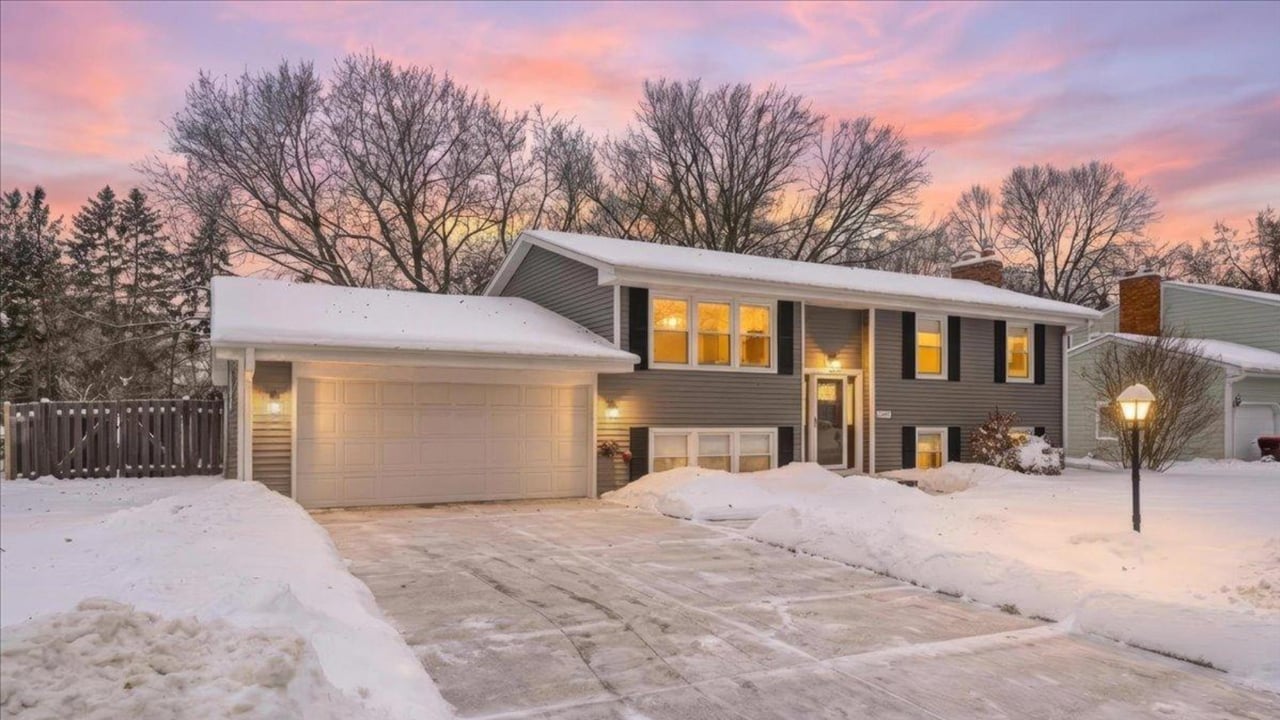
What happens when you sell a Minnesota home with a home equity agreement on it?
A home equity agreement (also called a home equity investment, or HEI) is paid off at closing out of your sale proceeds, the same way a mortgage is. The company records a security instrument against your property, so the title company will not close until it is paid and released. What you owe is not the cash you received. It is a contractual share of your home's current value, which in a rising market can run close to double the original advance. In August 2026, Minnesota Attorney General Keith Ellison settled with one of these companies, Unlock Partnership Solutions, over allegations that its Minnesota home equity agreements were unlicensed, high-cost mortgage loans.
By Darin Bjerknes | September 29, 2026
A Woodbury seller called me last spring with a problem she did not expect. Her title commitment came back with a recorded document from a company she had never thought of as a lender. In 2022, with rates climbing and a kitchen she wanted to finish, she had taken about $47,500 against her house. No monthly payment. No interest, she was told. Not a loan.
It was on her title. And it had to come off before her buyer could take the deed.
I have now seen versions of this in Woodbury, Cottage Grove, and Lake Elmo. Home equity agreements were sold hard across the east metro between 2021 and 2024, right when rates made a HELOC or a cash-out refinance painful. Those agreements are now reaching the point where people want to move. If you are one of them, here is what is actually on your title, what you will owe, and how to keep it from wrecking your closing date.
This is general information about a real estate process, not legal, tax, or financial advice. Your agreement controls, and you should have an attorney read it.
Why a "home equity agreement" shows up on your title commitment
The pitch is consistent across companies. You get a lump sum today. You make no monthly payments. In exchange, the company takes a share of what your home is worth later, settled when you sell, refinance, or hit the end of the term.
To protect that money, the company records a security instrument in the county land records. In Washington County, Ramsey County, and Dakota County, that filing behaves the way a second mortgage behaves. It shows up on the title commitment as an exception. Your buyer's lender will not fund over it. Your title company will not insure clear title until it is paid and released.
You stay on the deed. The company is not a co-owner. But the practical effect at the closing table is identical to a junior lien.
Minnesota now has an enforcement record on this point. On August 7, 2026, Attorney General Keith Ellison filed a settlement with Unlock Partnership Solutions, an Arizona company that entered into roughly 86 home equity agreements with Minnesota homeowners between 2021 and 2023. Advances ran from $30,000 to $339,500, in exchange for an average of about 33% of the homeowner's equity. Ellison alleged the agreements were mortgage loans that violated Minnesota's rate caps, disclosure rules, and the requirement under the Mortgage Originator and Servicer Licensing Act that mortgage lenders be licensed with the state, which Unlock was not. He further alleged Unlock charged an initial amount equal to 100% to 140% of the advance and collected up to 22% in annualized interest. Unlock denies the allegations. It agreed to $944,626 in monetary and debt relief, and to stop lending in Minnesota unless it becomes licensed by the Department of Commerce.
Nationally, the Consumer Financial Protection Bureau put out an Issue Spotlight on these products in January 2025, sizing the market at $2 billion to $3 billion with more than 37,000 originations among the top four companies. The complaints the CFPB catalogued are the same ones I hear at the kitchen table: surprise at the size of the repayment, disputes over the appraised value, and difficulty refinancing out.
What you actually owe at closing
This is the part that catches people. You do not repay the advance plus interest. You repay a percentage of your home's value at settlement, and the percentage is larger than the percentage you took out.
Hometap uses a ten-year term and a tiered share. Published examples show a homeowner who took cash equal to 10% of the home's value owing roughly 15% of current value if they settle in years one through three, about 17.8% in years four through six, and 20% in years seven through ten.
Run that against an east metro house. Say a Woodbury home appraised at $475,000 in 2022 and the owner took $47,500, which is 10%. She sells in 2026 for $530,000. At the year-four tier of 17.8%, she owes about $94,340. She received $47,500 and repays roughly double, four years later, out of proceeds she was counting on for the next down payment.
Point structures it differently but lands in a similar place. Point applies a "risk adjustment," typically 25% to 30%, that sets a starting value below your actual appraised value, then shares appreciation from that lower baseline over a 30-year term. Point caps total repayment through what it calls the Homeowner Protection Cap. The discounted starting value is why early exits feel so expensive: a large share of the "appreciation" you are paying on is the built-in gap between your real value and the adjusted one.
Your number depends entirely on your contract. Pull it out and find three things: the term, the share percentage, and the starting value the share is measured from.
The three ways out, and when each one makes sense
Pay it at closing from proceeds. This is what most east metro sellers do. You request a settlement statement, the title company treats it like a mortgage payoff, and the company wires a release after funds clear. It is the simplest path and it requires nothing from you except lead time. Your payoff will appear as a line on your closing paperwork, and if you want to know how to read the rest of that document, I walked through it line by line in how to read your seller's settlement statement in Minnesota.
Settle before you list. If you can clear it with savings, a HELOC, or a refinance, do it before the sign goes in the yard. Two reasons. First, it takes the valuation fight off the escrow clock, where you have no leverage. Second, it lets you price the house on the market rather than on what you need to net. Sellers who are working backward from a payoff number tend to overprice, and in a market where Twin Cities inventory is up 7.9% year over year, overpricing is expensive.
Challenge the valuation. Every one of these settlements runs off a fresh value, and the value is negotiable more often than people think. Point has a formal reconsideration of value process where you submit comparable sales through your account manager. Hometap requires the sale price to be at least 90% of fair market value, which matters if you sold below list or took a below-market offer for speed. Bring real comps. A $20,000 swing in value is real money when the company's share is 17.8%.
The timing problem, which is the real problem
The math is bad but predictable. The calendar is what actually blows up closings.
Hometap tells homeowners to start the settlement conversation about six weeks out. You provide a good-through date at least 30 days forward, return a binding offer notice, send a copy of the executed purchase agreement, and then receive a settlement statement good for 30 days with wiring instructions. If a physical appraisal is required rather than a desktop valuation, you pay for it and you wait for it.
Now put that against the east metro market. Woodbury homes went pending in about 28 days over the three months ending August 2026, with a median around $499,000, according to Redfin. Minneapolis Area REALTORS reported a metro median of $405,000 in August with 45 days on market. Most Minnesota purchase agreements close 30 to 45 days after acceptance.
Your house can go under contract and close before your payoff statement is even produced. That is how a clean deal turns into a request for an extension, and how a buyer who is rate-locked at 7.03%, the Freddie Mac 30-year average on September 24, 2026, starts getting nervous.
Request the payoff the week you decide to list. Not the week you get an offer.
Also plan for the release. In Minnesota, a satisfaction in recordable form is required to be delivered within 45 days of payment and written request, and under Minnesota Statutes 507.401 a title insurer can record a certificate of release when the payoff was sent and the satisfaction never showed up. Your closer should know both of those exist before they need them.
Disclosure, marketable title, and not signing something you cannot perform
A home equity agreement is not a physical defect, so it is not a Seller's Property Disclosure Statement item in the usual sense. It is a title matter. Your purchase agreement obligates you to convey marketable title, and a recorded, unreleased equity agreement is not marketable title.
Two practical rules. Do not sign a purchase agreement with a closing date you cannot hit, and do not set a list price before the payoff number is in your net sheet. If the payoff plus commission plus Minnesota deed tax and the rest of your closing costs leaves you short of what you need for the next house, you need to know that in September, not at the closing table in December.
If there are other payoffs stacked on the property, the sequence matters. I covered how competing claims get cleared in selling a home with a judgment lien in Minnesota, and the same escrow-holdback tools apply here. The closest cousin to this situation is the one I wrote about earlier this year: selling a home with a solar loan and a UCC-1 filing. Same pattern. A product marketed as not-a-loan, recorded like a loan, discovered at the worst possible moment.
How to clear a home equity agreement before your Minnesota closing
- Find the agreement and the recorded document. Pull your copy of the contract and search the property in your county land records (Washington, Ramsey, or Dakota). Identify the term, your share percentage, and the starting value.
- Request the settlement statement six weeks before you plan to close. Ask for a good-through date at least 30 days out, and ask in writing whether a physical appraisal will be required and who pays for it.
- Get the number into your net sheet before you price the house. Payoff, commission, deed tax, prorations, and the rest, so your list price is a market decision rather than a rescue attempt.
- Challenge the valuation if it is wrong. Submit comparable sales through the company's reconsideration process. Your listing agent can pull the comps that support your position.
- Confirm the release path with your title company. Get the payoff wired at closing, confirm receipt, and track the recorded satisfaction. Know that Minnesota Statutes 507.401 gives your title insurer a backstop if the release never arrives.
Frequently asked questions
Does a home equity agreement put a lien on my Minnesota home?
Functionally, yes. The company records a security instrument in the county land records to protect its interest. You remain the owner and the company is not on the deed, but the filing appears as an exception on your title commitment and has to be paid and released before you can transfer clear title.
How much do I pay back when I sell?
Not the advance. You repay a contractual share of your home's value at settlement, and that share is typically larger than the percentage you took. Published Hometap examples put a 10% advance at roughly 17.8% of current value if you settle in years four through six. On a $530,000 Woodbury sale that is about $94,340 against a $47,500 advance.
How long does it take to get a payoff from Hometap, Point, or Unlock?
Plan on six weeks. Hometap asks homeowners to start the process about six weeks before settlement, issues statements with roughly 30-day good-through dates, and may require a physical appraisal that adds time and cost. Woodbury homes have been going pending in about 28 days, so the payoff clock is usually the longer of the two.
Can I still sell if the payoff is more than my equity?
Yes, but the shortfall has to come from somewhere. Options include bringing cash to closing, negotiating with the company, or restructuring the deal. Start that conversation before you list. Trying to solve it inside a 30-day escrow with a buyer waiting is the worst version of this problem.
Are home equity agreements legal in Minnesota?
That is being actively litigated and enforced. In August 2026 Attorney General Ellison settled with Unlock Partnership Solutions over allegations its Minnesota home equity agreements were unlicensed mortgage loans that violated state rate caps and disclosure rules, and the CFPB has taken the position that these contracts are credit. Before signing one, ask the company for its Minnesota Department of Commerce license number and have a Minnesota attorney read the agreement.
Thinking about selling with one of these on your title?
If you have a Hometap, Point, Unlock, Unison, or similar agreement on a home in Woodbury, Afton, Stillwater, Cottage Grove, or Lake Elmo, get the payoff number before you get a list price. I will help you sequence the payoff request, the valuation, and the listing so your closing date survives. Reach out at [email protected] or book a call at calendly.com/darintheminnesotan.
Darin Bjerknes | Minnesōtan, Brokered by REAL | [email protected] | 612-702-5126 | darinbjerknes.com