Can I close on a new construction home in Minnesota if the driveway and sod aren't done?
Yes. Most winter closings on new construction in Woodbury, Lake Elmo, and Cottage Grove happen before the driveway is poured and the sod is laid. The protection is an escrow holdback: money held back at closing until the builder finishes the exterior work in spring. For a conventional loan, Fannie Mae requires the holdback to equal 120% of the estimated cost (or 100% of a guaranteed fixed-price contract), and the work must be done within 180 days of the note date. The city's own escrow protects the city, not you. Your protection has to be written into your purchase agreement and closing documents.
By Darin Bjerknes | November 23, 2026
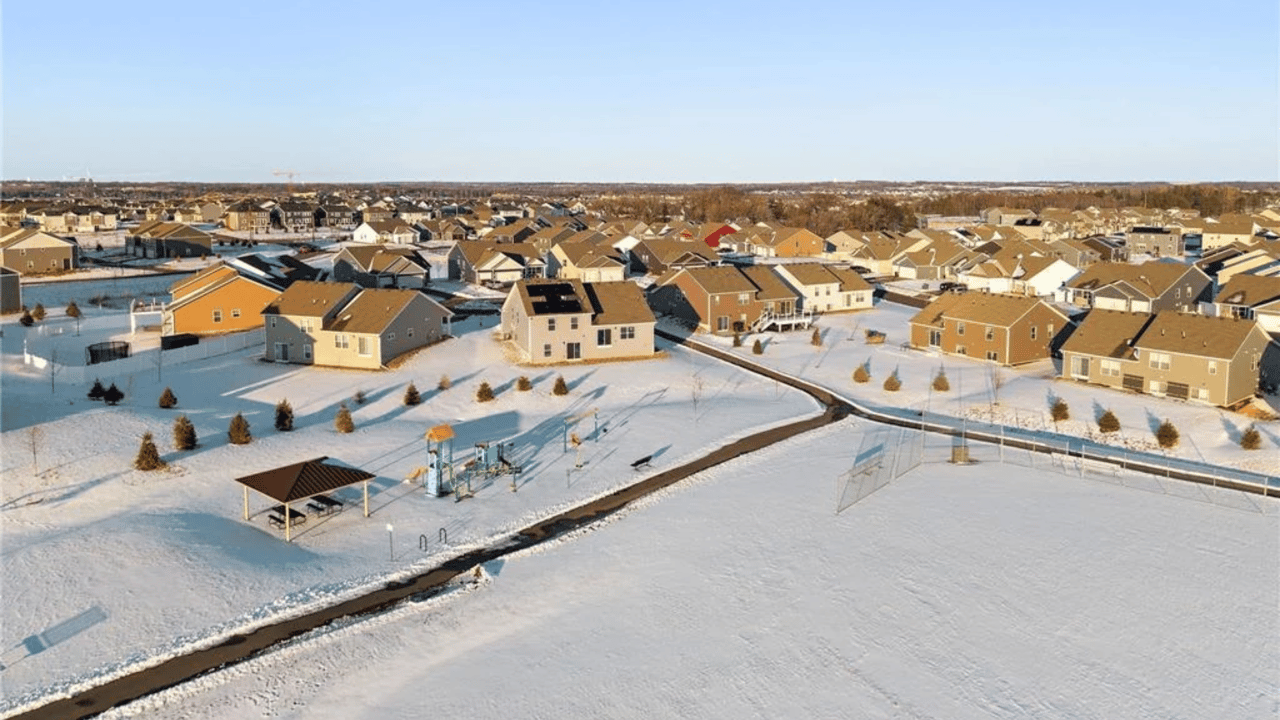
Every November I get the same call. A buyer is under contract on a new build in a Woodbury neighborhood like Sienna Grove or AirLake, or out at Royal Club in Lake Elmo. Their closing date is mid-December. They drive by on a Saturday and see a gravel pad where the driveway should be, frozen dirt where the lawn should be, and a silt fence still staked along the back lot line. Then they ask me: "Are we really supposed to close on this?"
Usually, yes. The concrete crews and sod installers in the east metro stop pouring and laying when the ground freezes, so a builder can't finish a December house the way it finishes a July house. Closing still makes sense for most buyers, especially if a rate lock or the sale of their current home sets the date. What matters is what's protecting the unfinished work after you sign.
Here's how that protection actually works in Minnesota. There are three separate escrows that buyers tend to lump together, and only one of them protects you.
Why Winter Closings Leave Work Unfinished
Ready-mix concrete needs temperatures above freezing to cure properly. Sod needs thawed ground to root. In the Twin Cities that window usually closes in early to mid-November and reopens in late April or May. A builder who frames a house in August and finishes the interior in December has no way to pour a driveway or establish turf before you close.
Minnesota cities plan for this. Woodbury's code says escrow items have to be finished within six months of the start of construction, but it doesn't count the time between November 1 and April 1. Chanhassen, on the west side, sets the deadline for homes that get a certificate of occupancy between October and May at July 1 of the following year. Most east metro cities follow some version of that spring deadline.
The Three Escrows (and Which One Protects You)
1. The city's building permit escrow
When a builder pulls a permit, many cities collect a cash escrow to guarantee site work. Woodbury's 2026 residential fee schedule lists $2,000 per unit for single-family homes in its R4 zone, plus a $100 administration fee. The city returns that money once it has a grading certificate, the required trees are planted, the boulevard sod is in, and the curb stop passes inspection. Stillwater collects a $2,500 grading escrow, a $1,200 landscaping and tree escrow, and $2,000 for the as-built survey. Lake Elmo collects a construction escrow set by its fee schedule or by the building official.
That money belongs to the builder, and the city refunds it to the builder. It exists so the city's stormwater grading and boulevard trees get done. It doesn't guarantee your driveway, your backyard sod, or your irrigation. And $2,000 doesn't come close to covering a $9,000 driveway.
2. The lender's completion escrow
If you finance the purchase, your lender has its own interest in the unfinished work. Fannie Mae's Selling Guide (section B4-1.2-05) lets a lender sell a loan on new construction before "postponed improvements" are complete, but only if:
- The items are part of the sales contract. Third-party contracts don't qualify.
- They were postponed for a valid reason, such as inclement weather.
- They don't affect the ability to get an occupancy permit.
- The cost doesn't exceed 10% of the "as completed" appraised value.
- The lender withholds 120% of the estimated cost, or 100% of a guaranteed fixed-price contract.
- The work is finished within 180 days of the note date and confirmed with a Form 1004D or a builder-and-borrower attestation letter.
- The final title report shows no outstanding mechanic's liens.
VA loans typically require 150% of the estimated cost. FHA and many individual lenders layer on tighter caps, and some won't allow holdbacks at all in certain months. Ask your loan officer by name, in writing, before you're 30 days from closing.
The lender's escrow is real protection. It only covers what the appraiser or the contract lists, though, and it's built to protect the lender's collateral, not your landscaping plan.
3. The buyer-negotiated holdback in your purchase agreement
This is the one you control. National builders use their own contracts, not the Minnesota Realtors purchase agreement, and many say nothing about holdbacks or explicitly refuse them. If your contract is silent, your leverage ends at closing.
A good holdback addendum lists each unfinished item, the dollar amount held for it, who holds the money (usually the title company), the completion deadline, how completion gets verified, and what happens to the money if the deadline passes.
Why This Matters More Than Buyers Think: The Warranty Gap
Minnesota's statutory new-home warranty under Chapter 327A gives you one year for faulty workmanship and materials, two years for plumbing, electrical, heating, and cooling, and ten years for major construction defects. But the statute's definition of "dwelling" in 327A.01 expressly excludes driveways, walkways, patios, retaining walls not needed for the structure, and similar items.
That means if the driveway goes in cracked, pitched toward your garage, or never goes in at all, the statutory warranty probably isn't your remedy. The builder's private warranty might be, and so might the contract. But the cleanest leverage is money sitting at the title company that the builder can't touch until the work is done right.
What the Numbers Look Like in the East Metro
These are budgeting ranges for the $500,000 to $900,000 price point. Your builder's line-item costs are the numbers that count, so always ask for them:
- Driveway: 7,000–14,000 for a standard three-car concrete driveway, more with decorative borders or a long setback.
- Sod and final grade: 4,000–10,000 on a typical third-acre Woodbury lot, more on walkout lots with slopes.
- Irrigation: 3,500–6,000 if it's in the contract.
- Exterior items: final paint, concrete stoops, patio pours, and gutters, at whatever the contract allocates.
On a $650,000 home with a $12,000 driveway and $8,000 of sod and grading, a 120% conventional holdback means $24,000 sits in escrow. That's well under Fannie Mae's 10% cap, but it's real money the builder doesn't get until spring. That's why builders push back, and why the conversation needs to happen before you sign, not at the final walkthrough.
Market conditions help you here. Twin Cities inventory reached a 3.2-month supply in October 2026, days on market rose to 51, and Freddie Mac's 30-year average was 7.28% on November 19. Builders in Woodbury and Cottage Grove are cutting prices on inventory homes. A builder who wants a December closing on a spec home has reason to agree to fair holdback terms.
Your Three Paths Before a Winter Closing
Path 1: Close on time with a documented holdback. This is best for most buyers. You keep your rate lock, move in on schedule, and the work happens in spring with money protecting it.
Path 2: Push the closing to spring. This makes sense if the unfinished list is long, includes anything affecting occupancy, or the builder refuses any holdback. It costs you rate lock extension fees (often 0.125% to 0.25% of the loan per 15 days) and possibly your current home's timing.
Path 3: Close without a holdback and trust the builder. I don't recommend it. Once you close, you're a warranty claim in a queue behind every other spring punch list in the subdivision.
If you're buying from a national builder, read my guide on negotiating builder incentives in Woodbury, because the holdback belongs in the same negotiation as the price cut and the rate buydown. If you're still deciding whether to build at all, start with new construction vs. resale in the east metro.
How to Set Up a Winter Escrow Holdback (Step by Step)
- Get the unfinished list in writing 30+ days out. Ask the builder's construction manager for every exterior item that won't be done by closing, with a cost for each.
- Confirm your lender's rules. Ask whether the loan program allows a postponed-improvement escrow, what percentage it requires (120%, 150%, or a lender overlay), and the completion deadline.
- Write the holdback into the contract. Use an addendum that names each item, the amount held, the title company as escrow agent, a firm completion date (I like May 31 for driveways and June 15 for sod), and what happens to the money if the builder misses the date.
- Verify at the final walkthrough and at closing. Check that the settlement statement shows the holdback line and that the title company has signed escrow instructions. Ask for confirmation that no mechanic's liens are of record. My title company closing guide walks through that day.
- Release only after inspection. In spring, walk the finished work, confirm the lender's 1004D or attestation is done, collect subcontractor lien waivers, and then authorize release. Unpaid concrete or sod subs can file a mechanic's lien up to 120 days after their last day of work, so the waivers matter.
Frequently Asked Questions
Can I close on a new construction home in Minnesota without a driveway?
Yes. Winter closings without a driveway are common in Woodbury, Lake Elmo, and Cottage Grove. Your lender will typically require a completion escrow, and you should negotiate a holdback in your purchase agreement that holds money at the title company until the driveway is poured and inspected.
How much money is held back for unfinished landscaping at closing?
For conventional loans, Fannie Mae requires 120% of the estimated cost, or 100% if the builder provides a guaranteed fixed-price contract. VA loans typically require 150%. Lenders can add their own stricter overlays, so confirm the exact figure with your loan officer.
Doesn't the city escrow protect me as the buyer?
Not really. City escrows, like Woodbury's $2,000 per unit in its R4 zone, are paid by the builder and refunded to the builder once grading, boulevard trees, sod, and curb stop inspections pass. They protect the city's interests, not your driveway or backyard.
Is a new construction driveway covered by Minnesota's new home warranty?
Generally no. Minnesota Statutes 327A.01 excludes driveways, walkways, and patios from the definition of "dwelling" covered by the statutory one-, two-, and ten-year warranties. That's why a funded escrow holdback is your strongest protection for exterior work.
What happens if the builder doesn't finish the work by the deadline?
It depends on your holdback agreement. A well-written addendum lets the title company release the escrowed funds to you or to a contractor you hire if the builder misses the date. Under Fannie Mae rules, postponed work must be completed within 180 days of the note date.
Thinking about closing on a new build in Woodbury or the east metro this winter? Before you sign the builder's contract, or before you're inside 30 days of closing, let's review your unfinished-work list and get the holdback in writing. Reach out at [email protected] or book a call at calendly.com/darintheminnesotan.
Darin Bjerknes | Minnesōtan, Brokered by REAL | [email protected]