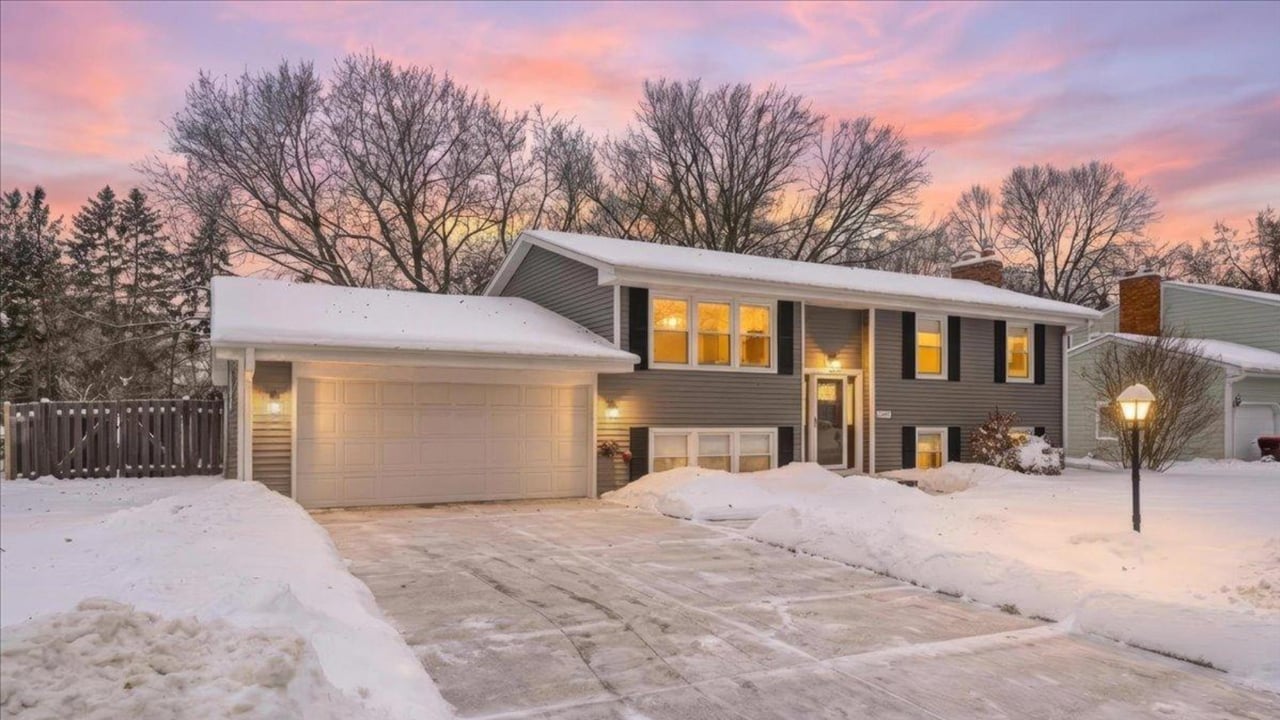
Should I list my Woodbury home this winter or wait until spring?
List this winter if you have a deadline, such as a job move, a contingent purchase, or a lease on the next home. Wait for spring only if you can carry the house for four to six more months and it shows well in May. January 2026 Twin Cities buyers paid 96.8% of list price and took about 66 days to accept an offer, while August buyers paid 98.2% in about 45 days. Zillow’s 2025 data puts the best Minneapolis-area listing window in the last two weeks of May, worth about 3.0% more, or $11,700 on a typical home. On a $650,000 east metro home that premium is roughly $19,500, and carrying costs can eat a large share of it.
By Darin Bjerknes | October 21, 2026
List Your Woodbury Home This Winter or Wait for Spring? What the 2026 Numbers Say
Every October I sit at a kitchen table in Woodbury, Lake Elmo, or Stillwater with a family that says the same thing: “We’re ready, but everyone says wait until spring.” The leaves are down, the kids are settled in school, and the house is as clean as it will be all year. Then comes the question. Do we list in November, or do we sit through a Minnesota winter and hope May pays us more?
The honest answer is that spring does pay more on average, but not by as much as most sellers think, and waiting has a price tag. This post gives you the 2026 numbers, the three realistic timing paths, and the carrying-cost math so you can decide with a calculator instead of a hunch.
Why the season changes your sale price
Buyer traffic in the Twin Cities swings hard with the calendar. According to Minnesota Realtors data reported by FOX 9, August 2026 metro homes sold at a $405,000 median, took about 45 days, and closed at 98.2% of list price. The 7-county metro tables for the same month show 2.9 months of supply and a 98.3% sale-to-list ratio.
Now look at January 2026, per the Minnesota Realtors January report. Metro new listings fell 10.8% and pending sales fell 12.9%. Homes took about 66 days to reach an accepted offer, and sellers received 96.8% of list price. The median price was $375,000, though a January median and an August median are not an apples-to-apples comparison because different homes sell in different months.
Here is the part sellers miss. In winter, both sides of the market shrink. Fewer buyers tour, but fewer competing homes are listed. The buyers who do show up in January tend to be on a deadline: a relocation, a lease ending, a pre-approval that expires. They are fewer, but they are serious.
Meanwhile, supply is building. New listings across the metro rose 8.2% in August and have climbed seven straight months, and statewide inventory hit a seven-year high above 20,000 homes. If you wait for May, you will not list into an empty market. You will list into the most crowded one of the year.
Path 1: List now through mid-November, or after January 5
Late November through New Year’s is the slowest stretch. Showings drop around Thanksgiving, and December buyers are often just looking. If you want a winter listing, I like a launch in the first three weeks of November or the first full week of January.
What works in a Minnesota winter:
- Shoot exterior photos this week. It is October 21 and your yard is still green and snow-free. Hire a photographer now, and end your MLS photo set with a summer-or-fall exterior. Buyers scrolling Zillow in January need to see the landscaping, the deck, and the lot.
- Set the house to 70 to 72 degrees for every showing. Minnesota Realtors’ winter guidance also recommends clear walkways down to pavement, path lighting (dusk arrives around 4:30 p.m.), a shoe station, and a fireplace running ten minutes before a showing.
- Lead with what winter proves. A heated garage, a mudroom, triple-pane windows, and furnace records show a buyer exactly how the house performs on the coldest day.
- Price to the 96.8% reality. January sellers received less of list price than August sellers did. Overpricing to “test the market” costs you more in winter because stale listings stay stale longer. My post on what to do when a house isn’t selling in Woodbury covers the cut-or-relist decision.
The winter-specific risk is the inspection. According to Structure Tech, a Minnesota inspection firm, no home inspector can properly inspect a roof covered in snow. They lean a ladder against the roof, brush snow off the south-facing slopes, and report what they can see. A buyer with a roof over 15 years old may ask for a spring re-inspection clause or walk. Pull your roof age, permits, and any repair records before you list. If your roof is old, read my guide on replacing it or offering a credit and the related insurance-before-closing post.
Path 2: Prepare now, list in late January or February
This middle path suits sellers who want to avoid the holiday dead zone but not give up the whole spring bump. You spend November and December on repairs, paint, decluttering, and photography. You launch the first or second week of February and aim to be under contract before the spring supply surge.
The numbers support it. HomeLight’s analysis of 2014 through 2024 sales found Minneapolis sellers earned 4.65% more by listing in March, and Minnesota homes took a median of 58 days to reach a contract versus 66 nationally. A February launch means your home is already live, priced, and seasoned when March traffic arrives. You also close in March or April, in time to buy or move before school ends.
The risk is the same as Path 1 with colder weather: you may face a thin January and February buyer pool, and you cannot count on a surprise offer.
Path 3: Wait for May
Zillow’s March 2026 analysis of 2025 sales in the 35 largest metros found that Minneapolis sellers who listed in the last two weeks of May earned a 3.0% premium, about $11,700. Buyer demand peaks before Memorial Day, and families want to be settled before the school year.
Here is a hypothetical to test whether waiting pays. Say you own a $650,000 home with a $400,000 mortgage at 3.25%. Your interest runs about $1,083 a month. Add roughly $580 for property tax, $200 for insurance, $350 for utilities, and $200 for lawn, snow, and upkeep, and you are near $2,400 a month. Waiting six extra months costs about $14,400. A 3.0% premium on $650,000 is $19,500. Your net gain, if you capture the average premium, is about $5,000. That is real, but it is small, and it disappears if you pick up a month of delay, a price cut, or a vacant house to heat.
Zillow’s figure is a Minneapolis metro average, not an east metro number, and averages hide wide ranges. A Lake Elmo acreage property and a Woodbury townhome do not follow the same curve.
Three other factors push against waiting:
- Rates. The 30-year fixed rate was 7.4% as of October 15, 2026, according to Trading Economics, up from 6.27% a year earlier. On a $500,000 loan, that gap is about $377 a month in principal and interest. Your spring buyer faces whatever rate exists in April, and no one knows if it will be better or worse.
- Taxes. Woodbury’s proposed 2027 levy is up 5.9%. Notices mail November 11 to 24, and every buyer in your price range will see that number. Read my Woodbury proposed property tax notice guide.
- New construction. East metro builders compete with resale homes in spring with incentives and finished inventory. Your home needs to beat a new build on price or condition.
Your price tier and your street change the answer
Averages hide the split in our market. Redfin’s Woodbury page shows November 2025 as a useful winter reference point: a $410,000 median, 43 average days on market, 90 homes sold, and sales about 1% below list. That is last winter, not a forecast, but it shows Woodbury homes do close in November.
Higher price points behave differently. Per the Minnesota Realtors August report, statewide pending sales under $400,000 fell 2% while sales above $1 million rose 15.5%. If you are selling a move-up or luxury home in Woodbury, Afton, or Lake Elmo, your buyer pool is smaller and less tied to the school calendar, so a winter launch costs you less than it costs a $400,000 townhome seller. Lake and wooded properties in Stillwater and Lake Elmo, on the other hand, photograph best from May through October, which is why the exterior photo step above matters so much.
How to choose
List this winter if you are buying your next home, have a job or school deadline, or have a vacant property. Prepare and launch in February if you want a middle route and your home is in good shape. Wait for May if you have low carrying costs, a showpiece yard or pool that photographs best in summer, and no purchase contingent on your sale. If you are unsure, run a net sheet before you decide. The numbers on paper usually settle the argument faster than opinions do.
Frequently Asked Questions
Is it a bad idea to list a house in Minnesota in winter?
No. Winter sellers face fewer buyers but also fewer competing listings. January 2026 metro homes sold for 96.8% of list price and took about 66 days to accept an offer. That is slower and slightly lower than summer, but the buyers are serious and many are on a deadline.
What is the best month to list a house in the Twin Cities?
Zillow’s 2025 data shows the last two weeks of May produced the highest premium for Minneapolis, about 3.0%. HomeLight’s 2014 to 2024 data found March paid Minneapolis sellers 4.65% more. Your best month depends on your home type, price range, and moving deadline.
Should I wait until spring if my house is ready to list now?
Not automatically. Spring brings more competing listings, and metro new listings have risen seven straight months. Waiting also adds carrying costs, about $2,400 a month in the example above, so run your own numbers first.
Do snow and ice hurt a Minnesota home inspection?
Yes, in part. A snow-covered roof cannot be fully inspected, so buyers may ask for a spring re-inspection or ask about roof age. Give buyers your roof age, permits, and repair records up front.
How much does the mortgage rate affect my sale?
It changes your buyer’s payment. At 7.4% versus 6.27%, a $500,000 loan costs about $377 more per month. Pricing and condition matter more to most buyers than the season does.
How to Decide Between a Winter and Spring Listing
- Calculate your monthly carrying cost. Add mortgage interest, property tax, insurance, utilities, and upkeep, then multiply by the months you would wait.
- Compare the cost to the spring premium. Multiply your value by 3.0% and subtract your carrying costs. If the gap is under $5,000, listing sooner usually wins.
- Book exterior photos before the first snow. Capture lawn, landscaping, deck, and curb appeal now so every winter listing shows summer.
- Pull roof, furnace, and permit records. Have them ready for the first buyer who asks.
- Choose your launch window. Pick early November, the first full week of January, or early February, and avoid Thanksgiving through New Year’s.
Thinking about selling in Woodbury or the east metro this winter or spring? Let’s run your carrying costs and a pricing plan against the 2026 numbers before you commit to a date. Reach out at [email protected] or book a call at calendly.com/darintheminnesotan.
Darin Bjerknes | Minnesōtan, Brokered by REAL | [email protected]